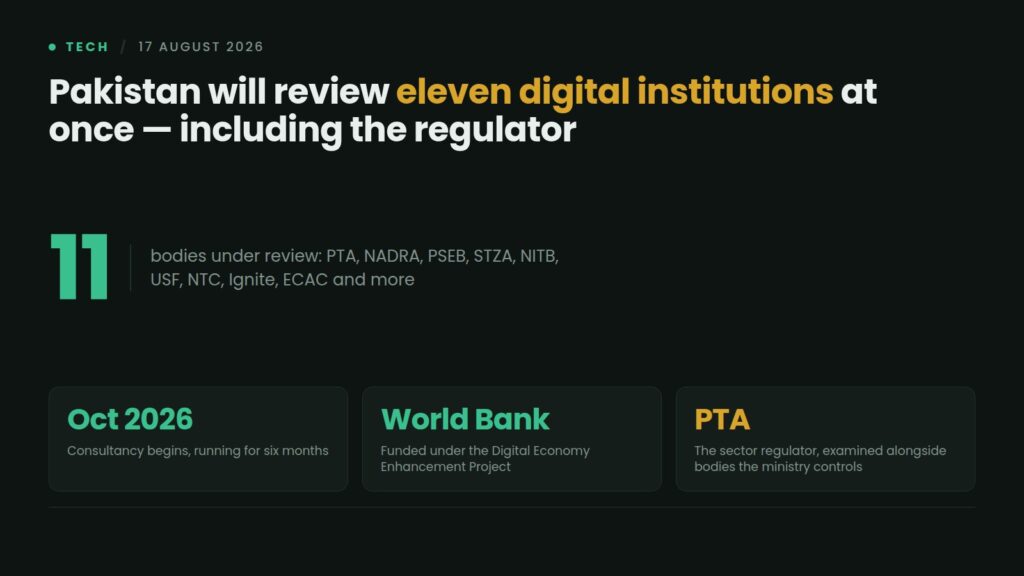
The Ministry of Information Technology and Telecommunication is commissioning a review of essentially every digital institution the Pakistani state operates.
The list runs to eleven bodies: PTA, NITB, Ignite – National Technology Fund, PSEB, NADRA, the Universal Service Fund, NTC, STZA, the Electronic Certification Accreditation Council, the Telecom Foundation, and the provincial IT boards.
The stated purpose is to identify overlaps in responsibilities, institutional gaps and coordination requirements, and to benchmark Pakistan’s framework against international digital governance models. The consultancy starts in October 2026 and runs for six months, funded under the World Bank-assisted Digital Economy Enhancement Project (DEEP).
Anyone who has dealt with more than one of these organisations will recognise the problem immediately.
Eleven bodies, overlapping mandates
These institutions were created at different times, under different governments, for different immediate problems. None was designed as part of a system.
PTA regulates telecom operators. NTC provides telecom services to government — so the ministry both regulates a market and competes in it. USF collects a levy from operators to fund rural connectivity. NITB builds government IT systems while NADRA runs the national identity database and, in practice, a great deal of government digital service delivery besides. PSEB promotes software exports; STZA creates zones for technology companies; Ignite funds innovation. Three separate bodies, three separate approaches to making the technology sector larger.
A company wanting to set up in Pakistan can plausibly deal with PSEB, STZA, PTA and a provincial IT board, and receive different answers from each. A ministry wanting a digital service built can go to NITB or NADRA. The overlap is not a suspicion the consultancy will investigate — it is the visible operating reality.
The regulator does not belong in this list
One inclusion deserves scrutiny: PTA.
PTA is not a promotional or delivery body. It is the sector regulator, and regulators are supposed to be structurally insulated from the ministry that sets policy — because they arbitrate between the state’s commercial interests and licensed private operators, and they set the terms on which spectrum, Pakistan’s most valuable telecom asset, is auctioned.
A restructuring exercise run by the ministry, examining the regulator alongside bodies the ministry directly controls, has an obvious risk attached even if nobody intends it: a plan that improves coordination by reducing the regulator’s independence. Coordination and independence pull in opposite directions here, and only one of them is in the stated objectives.
Investors pricing a Pakistani telecom licence care a great deal about which way that resolves.
Why the Telecom Foundation’s inclusion is well timed
The Telecom Foundation is on the list, and it is worth noting what surfaced about it this week.
The Foundation operates as a trust under direct ministry control and holds 55 percent of listed Pak Datacom. Pak Datacom has moved satellite backup connectivity for more than 400 National Bank of Pakistan branches from PakSat to a UAE-based operator, with the ground hubs relocated abroad. A former chief executive has objected on security grounds.
That is a precise illustration of what unclear governance produces. A state-controlled commercial entity took a decision with national security implications, and it is not obvious who was supposed to review it, or whether anyone did.
The right question for this consultancy is not only which bodies overlap. It is which decisions currently fall between them.
Restructuring is the easy part
The deliverables are a restructuring plan, a legal reform roadmap and an institutional coordination framework, covering digital public services, telecommunications, cybersecurity, artificial intelligence, cloud adoption and emerging technologies.
Producing those documents is achievable in six months. Implementing them is a different order of difficulty.
Each of these bodies has enabling legislation, a board, permanent staff, a budget line and in several cases an independent revenue stream. Merging or abolishing any of them requires parliament, not a ministry decision. Every one has an institutional constituency that will argue for its continued existence, and some sit partly outside MoITT’s writ entirely — NADRA’s remit reaches well beyond IT, and provincial IT boards answer to provincial governments that did not commission this review.
Pakistan has a long record of institutional reviews that produced a well-argued report and no legislation.
Worth doing anyway
None of that is an argument against the exercise. IT exports are Pakistan’s fastest-growing export category, the payments system has changed more in three years than in the previous twenty, and the institutional architecture governing all of it was assembled piece by piece for a country that no longer exists.
A serious map of who is responsible for what would be useful on its own, whatever happens to the recommendations. World Bank funding also means the output is likely to be published rather than filed, which is not always the case with government consultancies.
Two things to watch when it reports in early 2027: whether PTA’s independence is treated as a constraint or a variable, and whether anything is actually proposed for abolition. A restructuring plan in which every existing body survives with a clearer mandate is the outcome that requires no legislation and changes nothing.
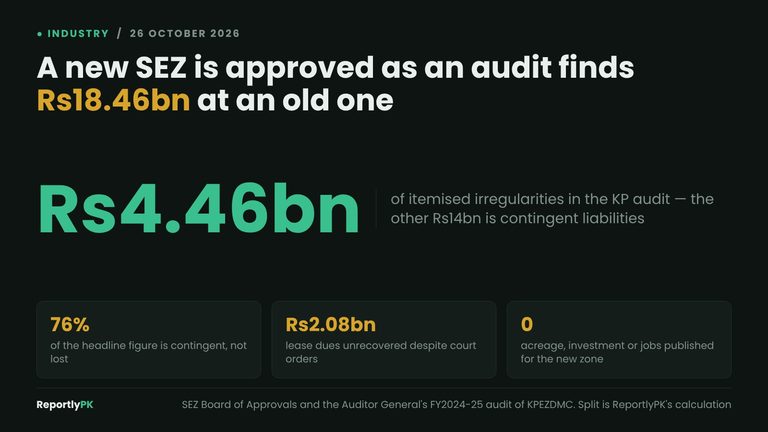
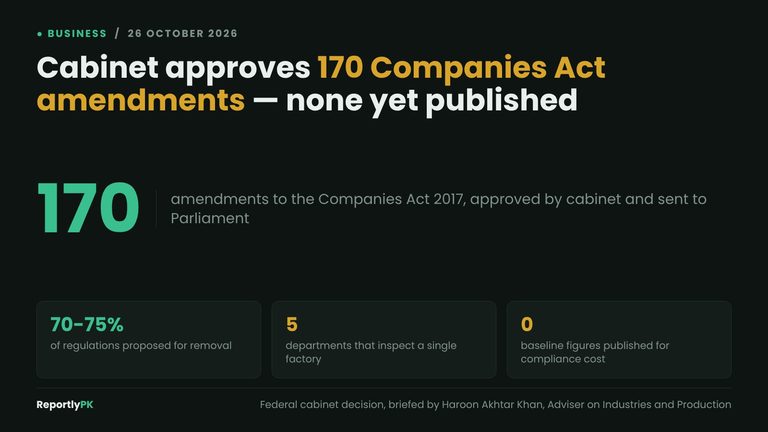
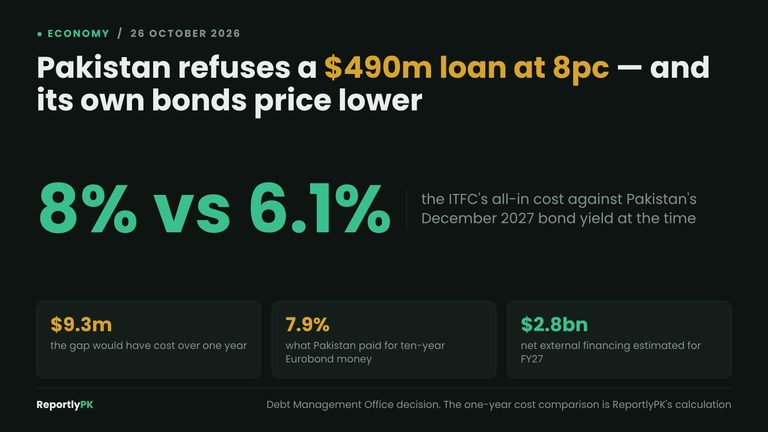
Related: The National Bank’s Satellite Backup Now Runs Through the UAE.
2 Comments
[…] Related: Pakistan Is Reviewing Eleven Digital Institutions at Once. One of Them Is the Regulator. […]
[…] Related: Pakistan Is Reviewing Eleven Digital Institutions at Once. One of Them Is the Regulator. […]
Comments are closed.